
Voter ID Verification: How to Verify EPIC Details
Learn how Voter ID verification works, how EPIC numbers connect to electoral records, and how businesses can automate verification using an API.
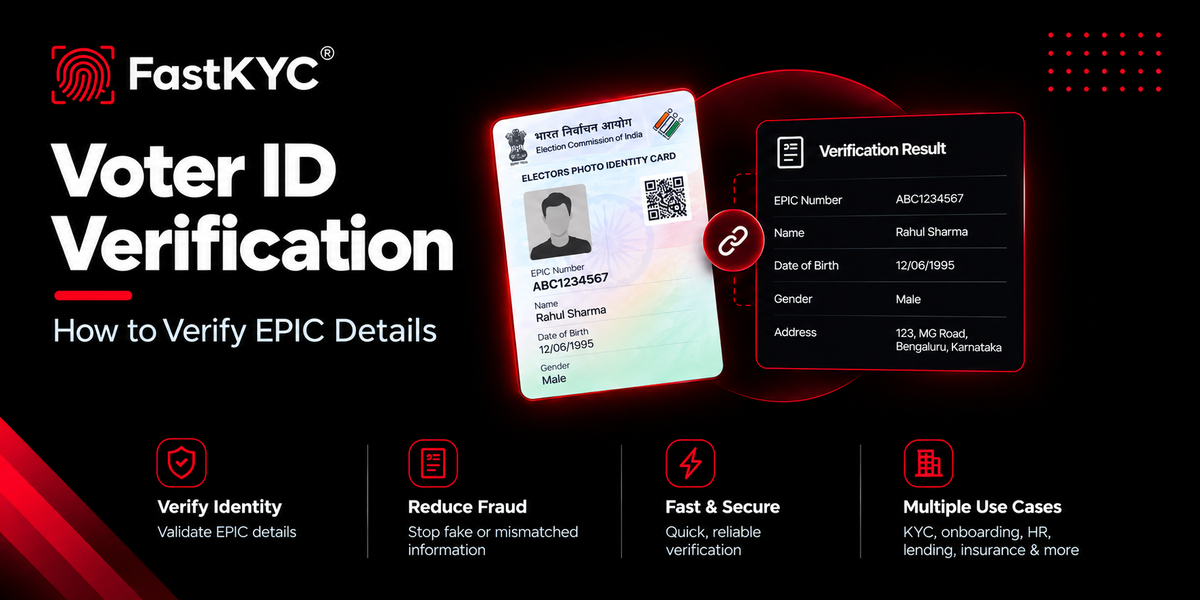
Voter ID verification helps validate information associated with a Voter ID or EPIC number through an applicable verification service.
A Voter ID is commonly used as an identity document, but the card itself is only one part of the picture. An elector's registration information is maintained in the Electoral Roll, and the EPIC number is associated with the corresponding voter record.
For individuals, understanding this relationship makes it easier to understand what Voter ID verification actually checks. For businesses, it can provide an additional identity verification step for onboarding, KYC, HR, lending, insurance, and other workflows.
What is a Voter ID?
A Voter ID is an identity card issued to an enrolled elector in India.
It is officially known as the Electors Photo Identity Card (EPIC). The card contains an EPIC number that is associated with the elector's voter record.
A Voter ID can exist as a physical card as well as a digital e-EPIC.
However, the Voter ID card and the Electoral Roll are not the same thing.
The card is the identity document, while the Electoral Roll is the official record of registered electors.
What is an Electoral Roll?
The Electoral Roll, commonly referred to as the voter list, is the official record of registered electors.
It contains the information used to maintain electoral registration for a particular area.
This distinction is important because having a Voter ID card does not, by itself, determine whether a person can vote. The Election Commission of India states that a person's name must appear in the Electoral Roll to vote.
So, in simple terms:
Voter ID = identity card
Electoral Roll = official voter record
The two are different, but they are closely connected.
How are Voter ID and Electoral Roll connected?
The EPIC number is the key identifier associated with the Voter ID and the corresponding voter record.
When an elector is registered, their information is maintained in the Electoral Roll and an EPIC is issued to them.
The EPIC number can then be used to identify the relevant voter record.
Think of it as:
Voter ID → EPIC number → Electoral Roll record
There is no need to think of this as manually linking a physical card to a database. The important point is that the EPIC number identifies the corresponding voter record.
This is also why the EPIC number is important for Voter ID verification.
What is an EPIC number?
EPIC stands for Electors Photo Identity Card.
The EPIC number is the identifying number associated with a Voter ID. It is used to identify an elector's record in voter-related services.
For verification purposes, the EPIC number is particularly useful because it gives the verification process a specific identifier to check.
Instead of relying only on the information printed on a card, a verification service can use the EPIC number as an identifier to validate the available voter information.
What is Voter ID verification?
Voter ID verification is the process of validating information associated with a Voter ID or EPIC number through a verification service.
The basic process is:
EPIC number / Voter ID details → Verification service → Verification result
Depending on the verification service and the available data, the result can provide information associated with the Voter ID or EPIC number.
This is different from simply looking at a Voter ID card and checking whether the printed information appears correct.
The key part of verification is validating the submitted information using the data available to the verification service.
Why does Voter ID verification matter for businesses?
Businesses often need to verify identity information before providing a service, approving an application, or completing onboarding.
Traditional verification may involve manually inspecting documents, entering details, and checking information separately.
An automated Voter ID verification process can reduce this manual work.
Common use cases include:
- Banking and lending: Identity checks during customer onboarding
- Insurance: Customer verification
- Staffing and HR: Candidate and employee verification
- Real estate and rentals: Tenant or customer onboarding
- Healthcare: Identity verification during registration
- Digital onboarding: Additional identity checks within an application
The value is not simply in checking whether someone has a Voter ID. It is in being able to validate the information associated with that identity document as part of a digital verification workflow.
What information can Voter ID verification provide?
The exact response depends on the verification service and the information available to it.
Depending on the verification service and the available data, the response may include information associated with the Voter ID or EPIC number, such as:
- EPIC number
- Name
- Date of birth or age
- Gender
- Address
- Other available voter details
For businesses, this structured information can then be used within an existing onboarding or verification workflow.
Voter ID verification through an API
For businesses processing verification as part of a digital workflow, an API can make the process easier to integrate.
Instead of handling each verification manually, an application can send the required information to a verification API and receive a structured response.
With FastKYC, businesses can integrate Voter ID verification into their existing KYC, onboarding, HR, lending, insurance, or identity verification workflows.
The goal is simple: instead of building the verification process from scratch, businesses can connect the verification check directly to the application where the user is being onboarded.
- Voter ID Verification
- Voter ID
- EPIC Number
- KYC
- Identity Verification